
@SignOfficial #SignDigitalSovereignInfra
I was sitting in a small chai spot near the corner of a crowded street, phone in one hand, glass in the other, staring at a token unlock calendar like it was supposed to tell me the future. Bikes passing, horns in the background, someone arguing over change at the counter—normal noise. And there I was, trying to reduce a whole market down to a few dates and numbers. It felt efficient. It also felt right at the time.
But something about it didn’t sit well that day.
I remember thinking how easy it had become. Check supply, look at the next unlock, assume pressure, plan the trade. Clean logic. Almost too clean. Because markets don’t really behave like neat spreadsheets—especially not the ones built on people who change their minds every few minutes.
That’s where things started to shift for me.
Because I realized I wasn’t really asking who ends up holding the tokens once they unlock. I wasn’t asking what they do next. I was just assuming they’d sell—or at least be ready to. And sometimes that assumption works. But when it doesn’t, it catches you off guard in a way that charts don’t warn you about.
That’s exactly how SIGN came into the picture for me.
At first glance, it checked all the usual boxes that make you cautious. Big total supply. A relatively small portion circulating. No built-in mechanism quietly tightening things when demand fades. Nothing about it looked designed to protect price in the short term. If anything, it looked like something you approach carefully, maybe even trade around instead of hold.
So I treated it that way at first.
But then I started noticing something I hadn’t been paying enough attention to before—not just how tokens were being released, but where they were landing. The system behind it wasn’t empty. There was actual movement—millions of attestations, huge numbers of wallets interacting, value already flowing through.
That changes the picture a bit.
Not in an obvious way. It doesn’t remove risk. It just makes the situation less one-dimensional.
Because there’s a difference between a token that gets distributed into silence and one that drops into a system where people are already doing something. Even if that “something” isn’t perfect, it still matters. It gives the token somewhere to exist beyond just being sold.
And that’s when I stopped thinking of it as just another unlock setup.
I started thinking about behavior instead.
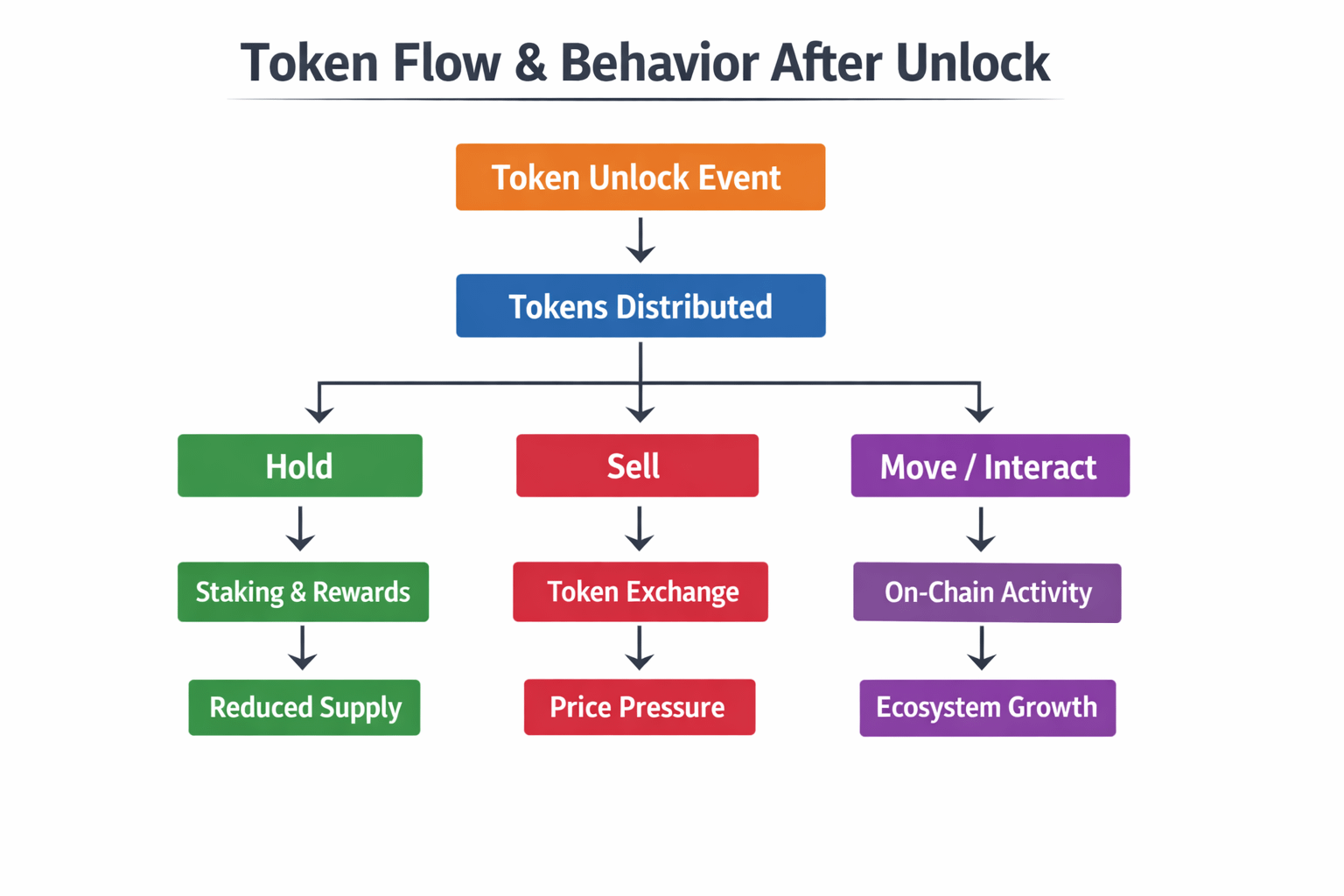
There’s this moment after tokens hit wallets that doesn’t get enough attention. It’s quiet. Nothing dramatic happens on the chart right away. But decisions are being made there. Hold, sell, move, ignore. That moment—multiplied across thousands or millions of wallets—is what actually shapes what comes next.
SIGN seems to be leaning into that moment.
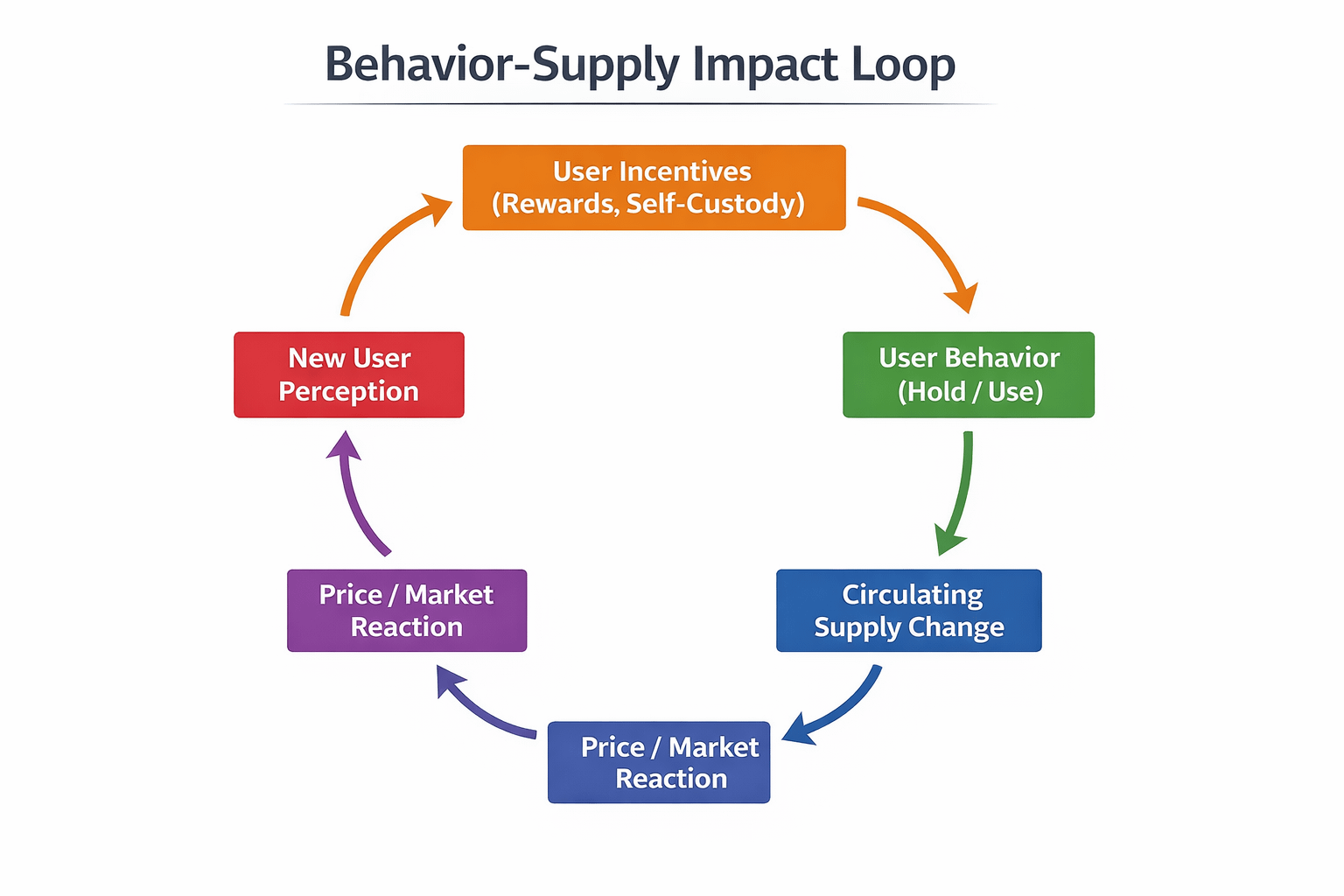
Not by trying to force outcomes, but by trying to influence them. Things like encouraging self-custody, rewarding duration, giving people a reason—however small—to not rush for the exit. It’s subtle. You won’t see it in a single candle. But over time, it starts to change how supply behaves.
At least, that’s the idea.
Whether it works is a different question.
Because I’ve seen the other side too. Incentives that look good on paper but end up attracting people who were never planning to stay. They farm, they wait, they leave. And suddenly what looked like support turns into delayed pressure.
That risk doesn’t disappear here.
If anything, it becomes something you have to watch more closely.
Now when I look at something like SIGN, I’m not just watching price or unlock dates. I’m watching patterns that are harder to quantify. Are more people keeping tokens off exchanges? Are they interacting with the system or just passing through it? Does activity grow, or does it spike and fade?
Those answers don’t come instantly. You notice them slowly, the same way you notice when a usually busy street starts feeling quieter than it should.
And that’s the part I trust more now.
Because supply, by itself, is only half the story. The other half is what people decide to do with it once it’s in their hands. That part doesn’t show up in bold numbers or neat schedules. It shows up in behavior, and behavior takes time to read.
I still check unlock calendars. I don’t ignore them.
But I don’t treat them like the final answer anymore.
If anything, they’ve become the starting point—the question, not the conclusion.
And with SIGN, the question isn’t just how much supply is coming.
It’s who’s still sitting with it when the noise fades, when the easy exits are gone, and when holding stops being the obvious choice.
That’s where things usually get real.
And from what I’ve seen, that’s exactly where this story is heading.
