
One wallet qualified at launch.
Its row was already in TokenTable. The allocation was live. Nothing looked wrong when the table first went out.
Then before the next step, that wallet could no longer use the original path.
Now the team has a real problem. The row is already part of a live payout flow. The allocation exists. The record says this wallet belongs here. But the path that was supposed to complete the claim no longer fits the actual user in front of them.
That is the only moment I care about here.
Not the clean launch. Not the nice table preview. The hard part starts when one live row still looks valid, but the original wallet path has broken and the operator has to decide what happens next without creating a second version of the truth.
If that decision moves into chat, the system is already leaking.
Someone has to stop the row before the wrong path keeps moving. Someone has to preserve the original state instead of quietly swapping it out. Someone has to authorize a delegated claimant without turning the whole case into staff judgment. And someone has to leave enough evidence behind that the next person can tell why the payout changed.
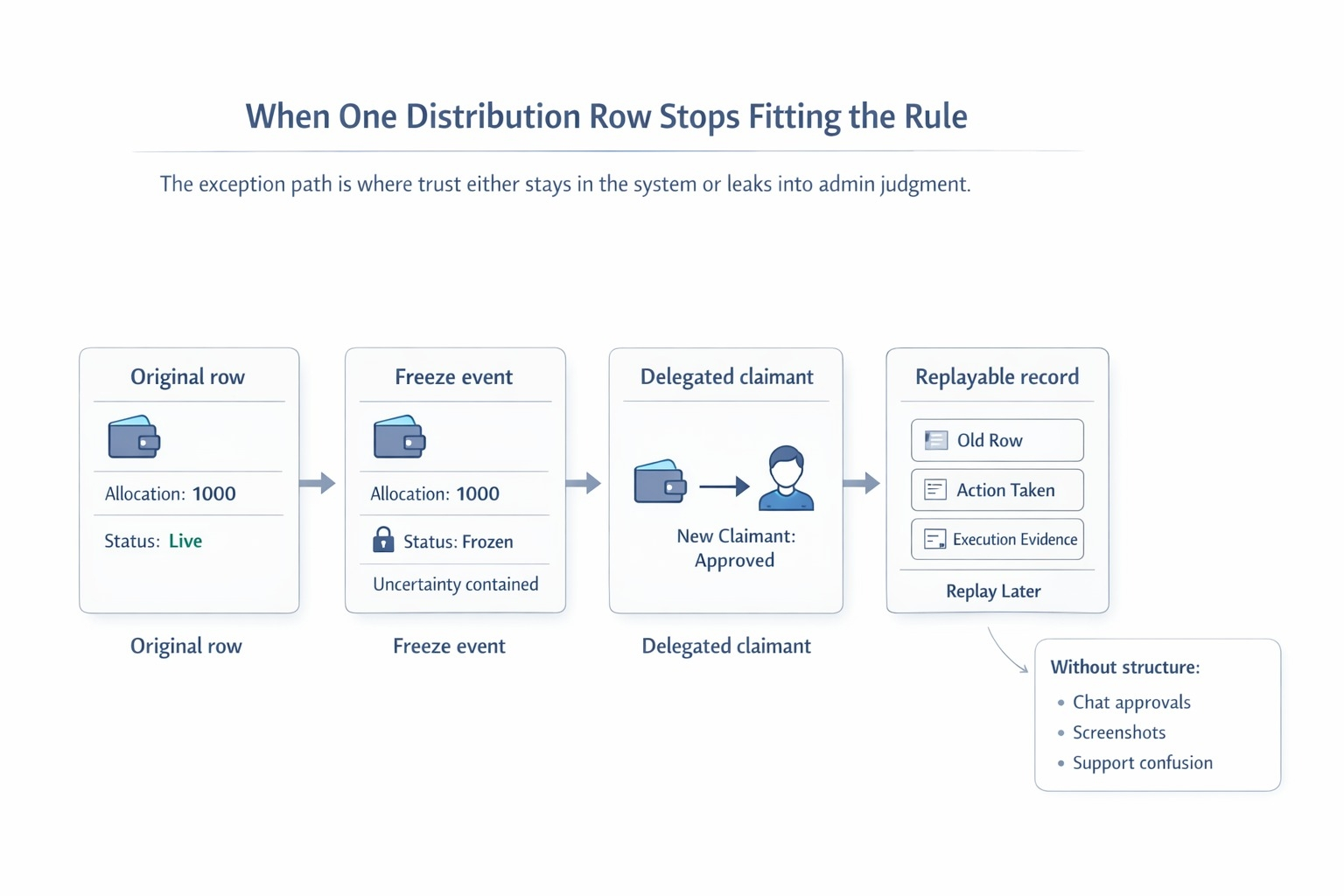
This is why the exception path in TokenTable matters more to me than the happy path.
The row can be frozen before the next action. The original row stays visible. The payout does not keep moving while the case is uncertain. Then the valid claimant can come through an explicit delegated flow tied to execution evidence instead of forcing the team to solve the case with screenshots and side messages.
That sequence is the whole point.
The row was live.
The wallet path broke.
The row was frozen.
The original state stayed visible.
The delegated claimant was authorized.
The action was linked to execution evidence.
Later, the case could still be replayed from the record.
That last part is where most systems start falling apart.
The claimant comes back later and asks why the first path stopped. Support has to answer. Finance wants to know why the eventual payout went somewhere else. Audit reopens the case and needs to see the freeze state, the original row, the delegated action, and the execution evidence without depending on whoever happened to be around that week.
If the record cannot answer those questions by itself, then the correction solved the payout but broke the system.
A freeze matters because it stops uncertainty from pretending to be settled. A versioned table matters because it preserves the bad state instead of replacing it with a cleaner story. A delegated claim path matters because it lets the real user complete a valid flow without pushing the operator outside the rails.
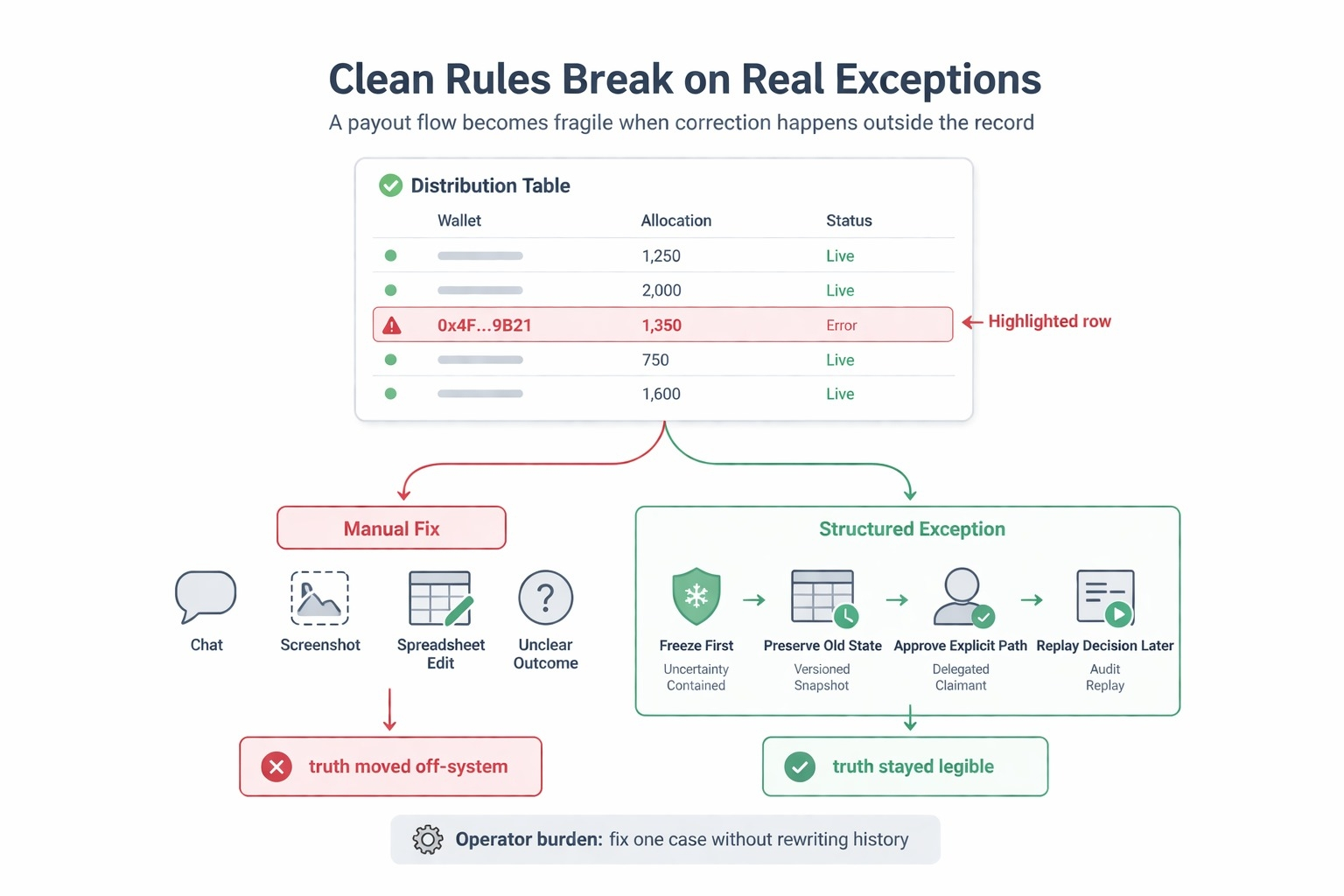
That is where $SIGN starts to feel earned to me.
Not because the clean path works. A lot of systems can look organized when nothing goes wrong. The real test is whether one qualified wallet can lose its original path after launch, move through a frozen and delegated correction flow, and still leave behind a record strong enough to answer the case later from the record alone.
That is the infrastructure claim I care about.
If SIGN can keep that one wallet incident policy-bound all the way through, then the trust story feels real. If it cannot, the table may still look clean while the truth lives somewhere off to the side.