

Sign Protocol is one of those projects I almost ignored.
I’ve seen this pattern too many times. Take something ordinary—identity, signatures, credentials—put it on-chain, wrap it in nice language, call it infrastructure. Most of it doesn’t hold up once you look past the surface. It either becomes a niche tool or quietly disappears.
But this one stuck with me longer than I expected.
Not because of what it claims to do, but because of what it’s trying to fix.
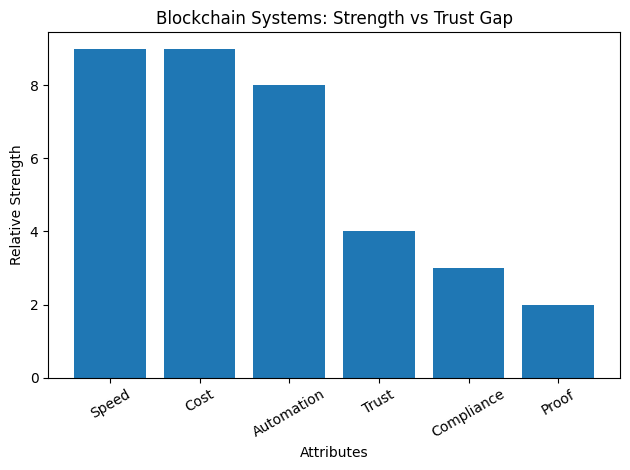
Money is no longer the problem. We solved that part faster than most people expected. You can move value across the world in seconds, split it across contracts, lock it behind conditions, release it automatically. From a systems perspective, it’s clean. Deterministic. Predictable.
I’ve worked around these systems. They behave exactly how you tell them to.
And that’s the problem.
They don’t know whether what they’re doing makes sense.
A transaction executes. Fine. But was it valid? Was it compliant? Was the sender authorized? Was the data behind it manipulated before it even hit the chain?
The system doesn’t care. It just executes.
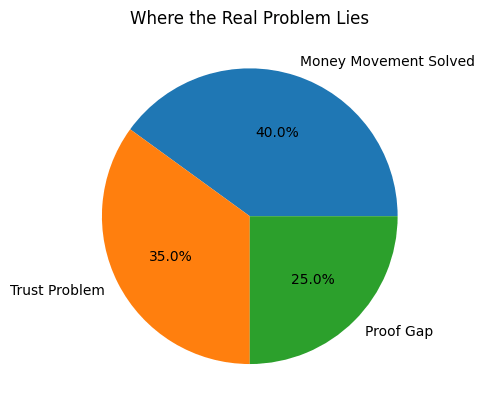
That gap—between execution and meaning—is where most of these “next-gen” systems quietly fall apart. Not immediately. Everything looks great at small scale. But once you introduce regulation, audits, or even basic disagreement between parties, things get messy.
I’ve seen this fail in enterprise systems. I’ve seen it in fintech. Crypto is not magically immune.
What Sign Protocol is doing, whether intentionally or not, is shifting focus to that messy layer. Not identity in the usual sense. Not just “who are you.” More like: “What can you prove, and will that proof still hold up later?”
That’s a very different problem.
Instead of treating data as something you store and hope people trust, it treats data as something you structure, sign, and make verifiable. Claims become objects. They have origin. They have format. They can be checked independently of whoever created them.
It sounds obvious when you say it out loud. It isn’t how most systems are built.
Most platforms still rely on implicit trust. You trust the database. You trust the issuer. You trust the process behind the scenes. And to be fair, that works—until it doesn’t.
When something breaks, you start digging. Logs don’t match. Records are incomplete. Context is missing. Now you’re reconstructing reality after the fact.
It’s a mess.
What Sign introduces is closer to an evidence model. Every meaningful action can carry a piece of structured proof with it. Not just “this happened,” but “this happened under these conditions, issued by this entity, following this schema.”
That changes how you design systems.
Because now you’re not just thinking about execution paths. You’re thinking about audit paths. You’re thinking about how something will be verified six months later by someone who wasn’t there when it happened.
Most engineers don’t design for that. Most products don’t either.
And that’s where the skepticism kicks in for me. Because this space loves big narratives—“trustless,” “decentralized,” “self-sovereign.” I’ve heard all of it. The reality is messier. Systems still need to interoperate with governments, regulators, institutions. They need to survive real-world constraints.
You don’t get to ignore compliance. You don’t get to skip verification.
If anything, those requirements are getting stricter.
So the question isn’t whether we can move money better. We can. That’s done.
The question is whether the systems around that money can produce evidence that holds up under pressure.
That’s where Sign starts to feel relevant.
Not as a shiny new product, but as plumbing. The kind of layer you don’t notice when it works, but everything depends on when it doesn’t. It sits between action and interpretation. Between data and belief.
And belief is the fragile part.
I don’t think most people appreciate how often systems rely on “good enough” trust assumptions. It works at small scale. It works in closed environments. But once you open things up—multiple chains, multiple actors, cross-border flows—that assumption starts to crack.
Now you need something stronger than trust-by-default.
You need verifiable context.
That’s what this is really about. Not identity as a profile. Not signatures as a feature. Evidence as a first-class component of the system.
It forces a different way of thinking. Less about “what can this system do,” more about “what can this system prove.”
And those are not the same question.
I’m still cautious. A lot of infrastructure projects look solid on paper and struggle in practice. Adoption is hard. Standards are harder. Getting multiple parties to agree on schemas, formats, and verification models is not trivial.
I’ve seen good ideas stall there.
But the direction makes sense.
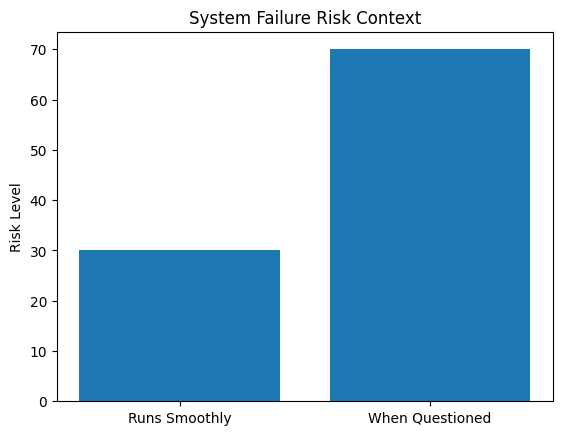
Because at some point, every system gets questioned. Not during the demo. Not during the happy path. During failure, during audits, during disputes.
That’s when you find out what actually matters.
And in those moments, execution is not enough. Logs are not enough. Claims are not enough.
You need proof.
Money follows rules. That part we’ve automated.
Trust doesn’t. It has to be constructed, carried, and verified over time.
Most systems treat that as an afterthought.
Sign is treating it as the core layer.
If that holds up in the real world, it won’t feel like innovation. It will just feel like something that should have been there from the beginning
@SignOfficial #SignDigitalSovereignInfra $SIGN
