
$BTC remains the benchmark and backbone of the cryptocurrency market. As the original decentralized digital asset, BTC sets the tone for altcoins, DeFi projects, and institutional flows. Its importance extends beyond speculation: it acts as digital gold a hedge against inflation, and a store of value, while also serving as the primary on-ramp for investors entering crypto markets. Institutions, ETFs, and corporate treasuries continue to adopt BTC, reinforcing its role as a cornerstone asset in both retail and professional portfolios.
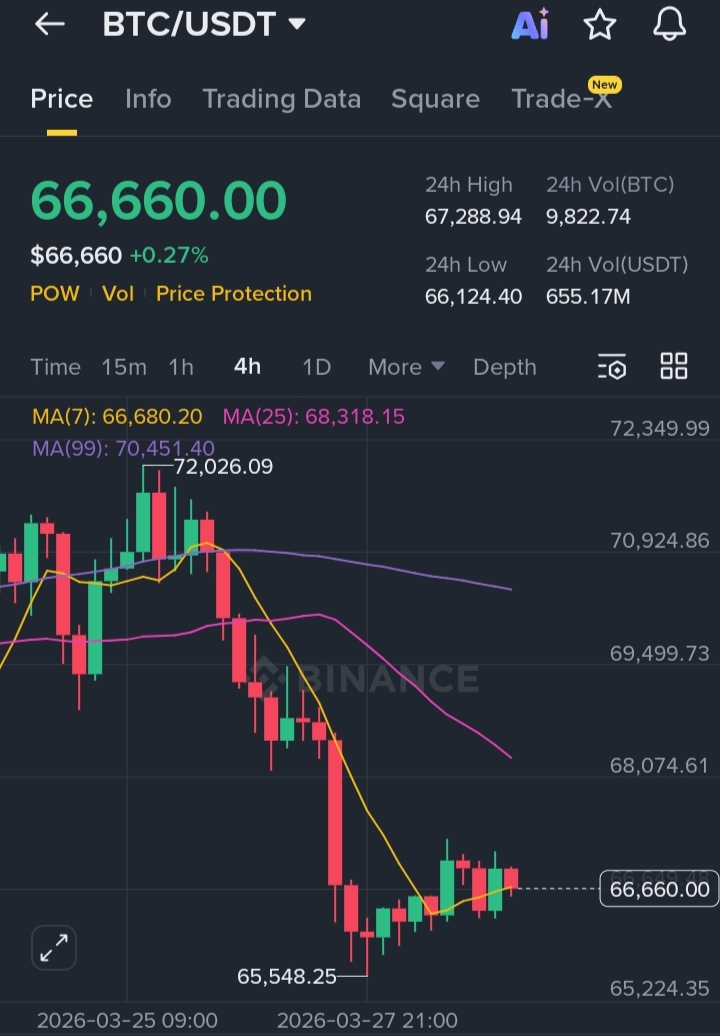
From a trader’s perspective, BTC’s current price of $66,660 is sitting in a consolidation zone after recent volatility. Short-term and swing traders can look for key entry points based on price structure. Pullback entries near $64,500–$65,500 offer lower-risk positions if support holds, allowing buyers to accumulate during dips. Formomentum entries a move and hold above $67,000–$67,500 can signal continued bullish strength and breakout potential.
Potential targets for short- to mid-term trades include $69,500 as the first resistance zone, followed by $72,000 and a more ambitious level at $75,000 if bullish momentum sustains. Traders should also consider a stop-loss around $63,800 below key support, to manage risk in case of sudden market reversals.
Overall, BTC’s market dominance, liquidity, and widespread adoption make it an essential asset for both hedging and growth strategies. Traders should monitor macroeconomic news, institutional flows, and on-chain metrics, as these factors heavily influence BTC’s short term swings. Using disciplined entries, stop loss management, and realistic profit targets can help capture opportunities while mitigating downside risk in this volatile but highly liquid asset.